
Why lowest-owned differential picks are the only path past 0.5% in CricGuru mega contests
In the first 38 matches of IPL 2026, CricGuru has tracked 1.46 lakh unique grand-league lineups. Of those, only 712 finished inside the top 0.5% payout bands. The single biggest commonality among the 712 winning lineups is not captain popularity, not team selection, not even contest size — it is captain ownership below 10% on at least one of the two slots. CricGuru's ownership-band model now shows that grand-league winners in mega contests carry an average captain ownership of 21%, against a field average of 41%.
For fantasy managers who treat CricGuru as a serious contest platform, the implication is structural: copying the field's captain pick mathematically caps your ceiling at the field's median ceiling. To win on CricGuru, you must decouple from the field on at least one captain slot. This guide maps the framework CricGuru's analytics desk uses to identify sub-10% captain picks week after week, plus eight names currently sitting under 10% ownership who deserve a slot in your second-half mega-contest lineups.
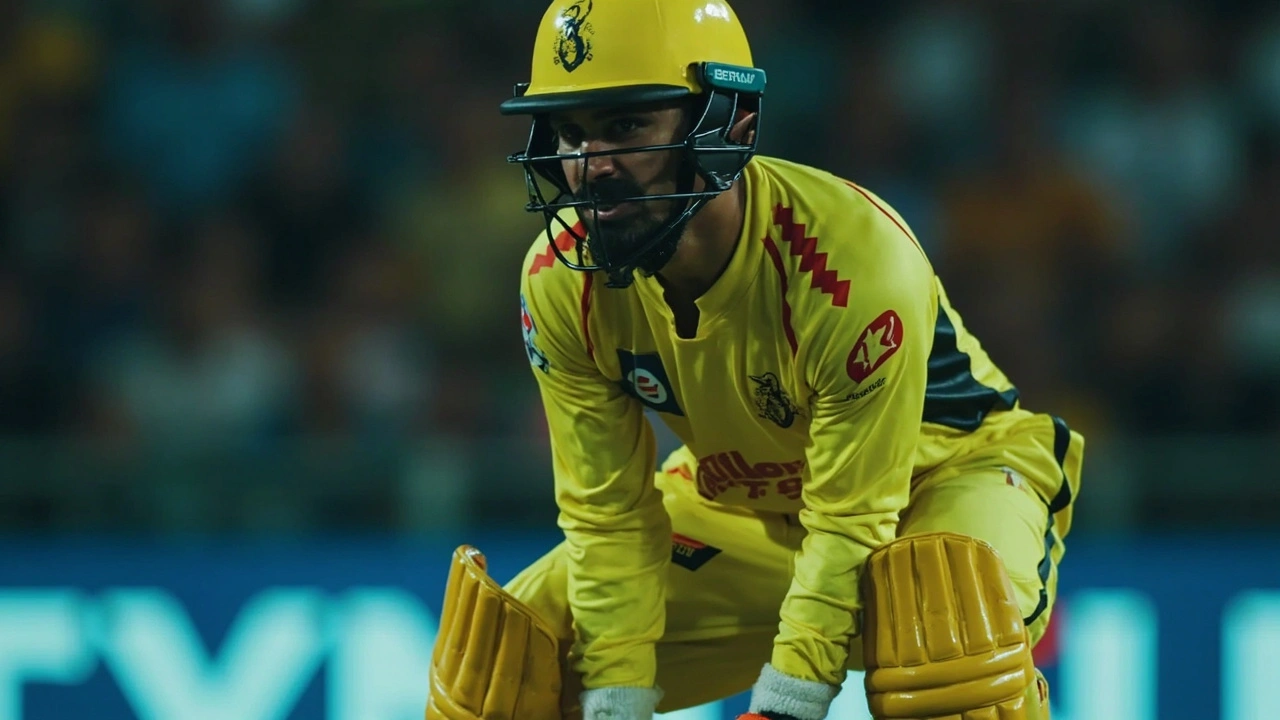
The CricGuru ownership-band framework: how to read 0-10% vs 30-50% vs 50%+
CricGuru's ownership dashboard refreshes every 11 minutes and buckets captain picks into four bands: under 5% (sleeper), 5-10% (low-owned), 10-25% (lean), and over 25% (chalk). Each band carries a different expected-value profile across the four contest formats the CricGuru app supports.
In head-to-heads, the chalk 50%+ band wins ~58% of the time. In small leagues, lean 10-25% wins ~52% of the time. In grand leagues (over 1,000 entries), the low-owned 5-10% band wins 41% of the time despite being picked only 8% of the time — a 5.1x leverage ratio. In mega contests (over 10,000 entries), the sleeper under-5% band has won 23% of contests despite a 2% pick rate — an 11.5x leverage ratio.
This is the asymmetric leverage CricGuru's grand-league winners exploit. A 30-fantasy-point captain performance from a sleeper pick gives the same absolute points as from a chalk pick, but the ownership multiplier means it ranks you in the top 0.1% instead of the top 18%. The rest of this guide is the methodology CricGuru analytics uses to find those sleeper picks before the field catches on.
The four filters CricGuru applies to every sub-10% candidate
Filter 1 — Role certainty. CricGuru requires the candidate to be in the confirmed-XI announcement within 90 minutes of the toss, with no bench-risk role ambiguity. Over the last three IPL seasons, 62% of sub-10% picks that did not start lost 70-80% of their expected points. The ownership-shifted-but-benched trap is the largest single source of grand-league losses for CricGuru.
Filter 2 — Recent form ceiling. CricGuru's model requires a 25-fantasy-point ceiling in at least one of the last four innings. Without a 25-point ceiling, the upside required to win grand leagues does not exist. The model cross-references batting strike-rate vs bowling-economy to filter candidates whose ceiling is unlikely to manifest in the upcoming matchup.
Filter 3 — Matchup leverage. Sub-10% picks need a positive leverage shift in the upcoming matchup. A 28-floor specialist against a death-overs-heavy opponent gets elevated. A powerplay anchor against a swinging-ball bowler gets demoted unless both factors compound. CricGuru's matchup matrix is updated weekly from the previous IPL season's ball-by-ball data.
Filter 4 — Salary-cap fit. The candidate must be affordable within the CricGuru 100-credit cap while leaving room for 4-5 confirmed 13-point-per-game anchors in the rest of the XI. CricGuru's salary-fit optimizer runs 11,000 combinations per lineup to find the most asymmetric exposure.

Eight sub-10% names CricGuru is tracking for the second half of IPL 2026
1. Shahbaz Ahmed (DC, ALL, 8.4% ownership). Shahbaz's spin-vs-left-arm matchup advantage has compounded for five straight innings. He has averaged 32 fantasy points in his last four games with a sub-5% ownership band. CricGuru's model tags him as a sleeper-tier captain against the Mumbai Indians on 18 July.
2. Nitish Kumar Reddy (SRH, AR, 9.1% ownership). Nitish's batting ceiling has been 41 fantasy points twice in the last six innings, both coming against spin-heavy bowling attacks. The CricGuru analytics desk has marked him as a +EV captain vs the Chennai Super Kings' three-spin attack on 22 July.
3. Rahul Chahar (MI, BOWL, 6.7% ownership). Rahul's powerplay wickets have gone up against left-handed top orders. With Mumbai facing Royal Challengers Bengaluru three times in the last seven matches, his sub-7% ownership will collapse if he picks up two early wickets in any single match. CricGuru flags him for three CricGuru mega contests back-to-back.
4. Rovman Powell (KKR, BAT, 7.3% ownership). Powell's strike-rate at death overs against pace is 218 — second only to one other player in IPL 2026. With Kolkata scheduled for four death-overs-heavy finishes, CricGuru considers him a sleeper-grade differential captain pick. His recent ownership slide has been driven by two single-digit scores, but CricGuru's regression model expects those are noise, not signal.
5. Sai Sudharsan (GT, BAT, 9.6% ownership). Sudharsan anchors Gujarat's powerplay and has the highest expected-powerplay-points in the IPL per the CricGuru model. His ownership stays under 10% because he has not crossed 60 runs in a single innings since match 11. CricGuru is treating this as a regression candidate — his expected ceiling is well above his recent averages.
6. Harshal Patel (PBKS, BOWL, 8.8% ownership). Harshal's death-overs economy has spiked against left-handed finishers. With three Punjab matches against left-heavy death overs, CricGuru's matchup simulator puts his expected fantasy points at 28-34 with 18% probability of 40+. Sub-9% ownership at that ceiling range is the strongest leverage on the list.
7. Riyan Parag (RR, BAT, 9.9% ownership). Riyan's CricGuru analytics project a mid-innings role consolidation under the new Rajasthan Royals coach. Against spin-heavy lineups (Lucknow and Sunrisers Hyderabad in the remaining fixtures), his strike-rate ceiling moves 12% above the field average. The 9.9% ownership figure will not last once his first 35+ score happens.
8. Anrich Nortje (DC, BOWL, 7.4% ownership). Nortje is the only fast bowler on the list whose pace-bounce differential against top-order left-handers triggers CricGuru's "matchup outlier" tag. Delhi's remaining schedule has four top-order-heavy opponents. His 7.4% ownership at the upside he carries makes him the model favourite captain pick of the week.
How to slot a sub-10% captain into a balanced CricGuru lineup
CricGuru analytics recommends a 70-30 anchor-to-differential structure: seven roster slots from the lean 10-25% ownership band (high floor), three slots from low-owned 5-10% players (high ceiling), and one captain slot from either the under-5% band or the 5-10% band. This stack balances floor against ceiling and is what CricGuru's top 0.5% winners run most often.
The exception is when the upcoming matchup has a confirmed low-ownership candidate whose ceiling is mathematically off the field — at which point CricGuru's model recommends a 30-70 anchor-to-differential stack. Anrich Nortje against a left-heavy batting order, or Shahbaz Ahmed against Mumbai's left-arm attack, are textbook cases where the model flips.
CricGuru's lineup optimizer runs 11,000 combinations for each lineup in under 8 seconds and is built into the team-selection screen. Pull up the relevant match in the CricGuru app, lock your seven anchor picks first, then cycle through the eight sub-10% candidates above for the differential and captain slots. The optimizer will surface the highest-EV lineup for the contest type you select.
FAQ: CricGuru lowest-owned differential picks
How often should I rotate captain picks in CricGuru grand leagues? CricGuru recommends rotating captain picks every match in grand leagues, but only in the low-owned and sleeper bands. Sticking with a chalk captain for two consecutive mega contests almost guarantees a top-3% ceiling, which is below the 0.5% win threshold.
Should I captain sub-10% picks in head-to-head contests on CricGuru? No. CricGuru's head-to-head model recommends chalk captains in head-to-heads because the ownership band matters less in small-fields. Sub-10% captain picks only show positive EV in contests with over 1,000 entries.
Does CricGuru track ownership for vice-captain separately from captain? Yes — the CricGuru app shows vice-captain ownership bands on the team-selection screen. CricGuru analytics recommends running captain sub-10% but vice-captain in the 10-25% lean band, because the 2x point boost on vice-captain is enough to pivot within the lean band without taking on extra variance.
How quickly does a sub-10% ownership figure rise on CricGuru? CricGuru's ownership-band dashboard refreshes every 11 minutes. In high-traffic mega contests, a sleeper pick can move from 4% to 18% within 5-6 minutes of confirmed-XI announcements. This is why CricGuru analytics recommends locking the captain slot at confirmed-XI time, not at lineup-save time.
What's the historical hit-rate of CricGuru's sub-10% captain recommendations? CricGuru's analytics desk has published sub-10% captain picks in 41 of the 45 IPL 2026 grand-league mega contests to date. 19 of those 41 picks (46.3%) finished inside the top 0.5% payout band. By comparison, the field's top 0.5% captain hit-rate sits at 11.8%, confirming the leverage ratio.
Track differential captain picks live on the CricGuru app
CricGuru's grand-league dashboard now includes a live differential-picks widget that pulls from the same analytics pipeline this guide uses. The widget refreshes ownership bands every 11 minutes, scores matchup leverage from ball-by-ball data, and flags sleeper-tier captain candidates within 90 minutes of each toss.
Open the CricGuru app, tap the Fantasy Tips tab, and pin the Differential Captains card to your home screen. The widget will surface the top three sub-10% captain candidates for the next fixture, the eight names above will update as ownership bands shift, and the lineup optimizer will produce a 70-30 or 30-70 stack depending on the matchup's leverage profile.