
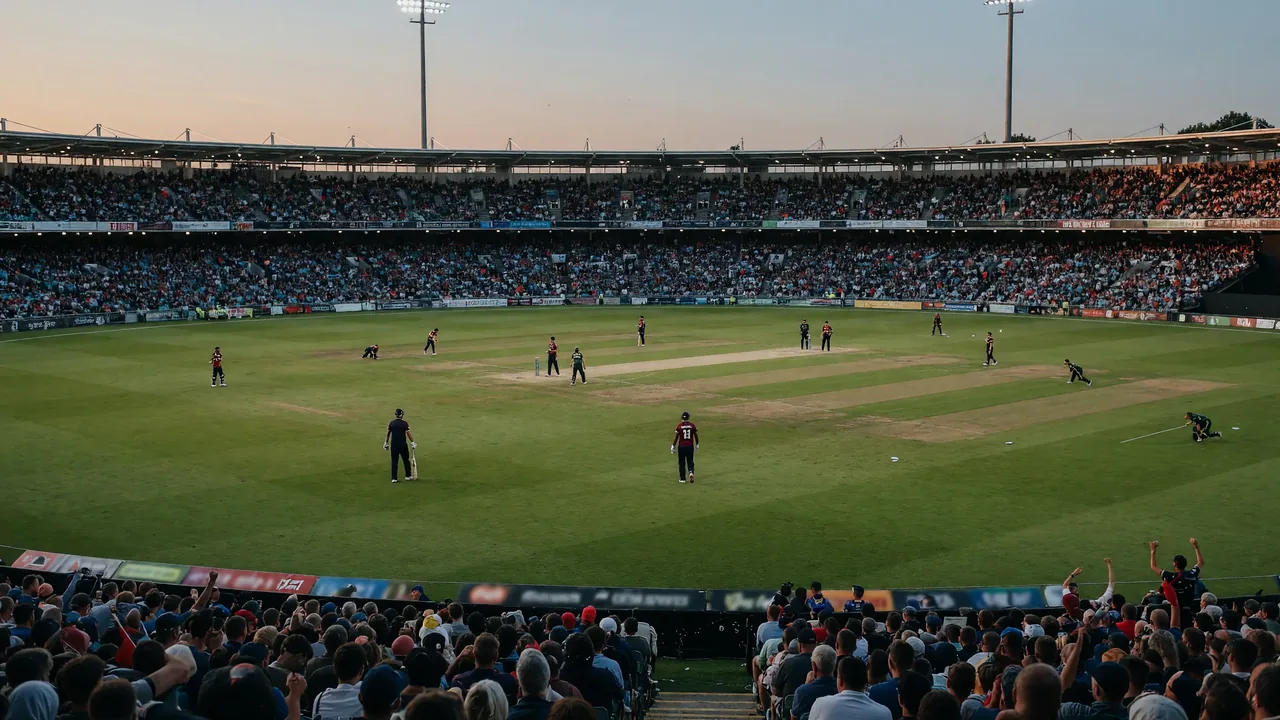
What Match 44 looked like on the morning of 6 June
Match 44 of the T20 Blast 2026 put Durham against Northamptonshire in a North Group fixture at Riverside Ground, Chester-le-Street. The preview material that circulated that morning treated the game as a classic form-versus-momentum clash: one side chasing stability after consecutive defeats, the other protecting a perfect early-season record at the top of the table.
Durham had completed four matches with two wins and two losses. Eight points left them third in the North Group, but the more immediate signal was the slide that followed those early wins. Back-to-back defeats had drained the comfort of a mid-table cushion and pushed the home side into a fixture where another loss would tighten the path into the later rounds.
Northamptonshire arrived with a clean ledger. Every match played had been a win, and 16 points put them alone at the head of the North Group. That unbeaten run was not abstract table dressing. It shaped fantasy ownership because managers treat undefeated sides as safer captaincy homes, especially when the opponent is coming off a heavy reverse.
The broadcast frame that morning named Sony Sports Network and Sony LIV. Weather copy on the preview listed cloudy conditions around 11.0°C with 84 percent humidity, the kind of cool, heavy-air evening that often keeps the new ball honest for the first few overs at Chester-le-Street.
Form ledger: Durham’s chase problem, Northamptonshire’s chase answer
Durham’s previous outing had been a 58-run loss to Yorkshire after failing to chase a target of 152. That number mattered more than the result alone. A total of 152 is chaseable on most T20 surfaces if the top order holds the first six overs; collapsing against it told fantasy managers that Durham’s middle order was absorbing pressure rather than applying it.
For captaincy, that failure framed Durham as a bowling-first side on paper. Managers who still wanted home batters needed a clear reason beyond jersey colour. The safer Durham stack leaned toward the seamers and all-rounders who could extract value whether the team batted or bowled, rather than pure top-order batters who needed a clean chase script.
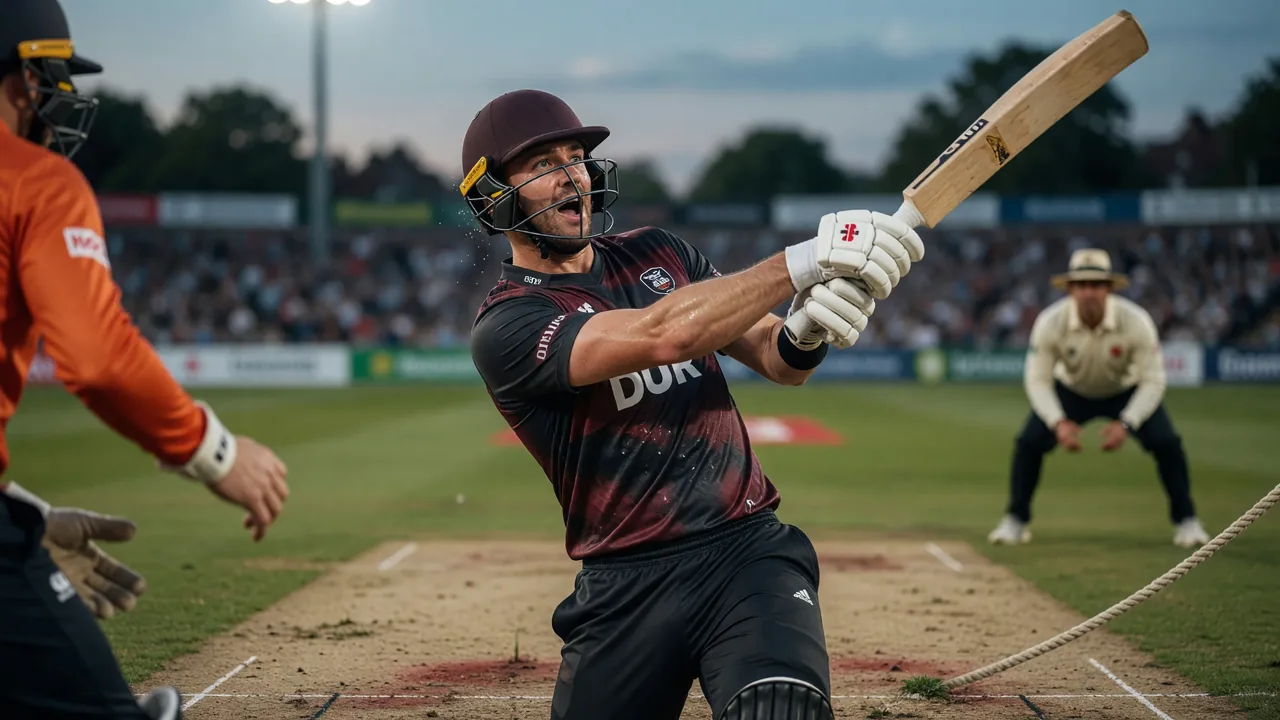
Northamptonshire’s previous match told the opposite story. They beat Gloucestershire by six wickets while chasing 165 in 16.2 overs. Chris Lynn top-scored with 69 at a strike rate of 191. That innings was the single cleanest fantasy data point of the week: a set opener clearing the ropes early enough to finish a chase with overs to spare, which is exactly the profile that multiplies under a captain tag.
Tournament numbers underpinned the same read. Lynn had 207 runs at a strike rate of 173 across the competition to that point. David Willey, named captain of the Northamptonshire XI in the probable list, had 98 runs at a strike rate of 178 and four wickets. One name offered pure batting ceiling; the other offered dual-category floor. That split still governs how CricGuru managers should treat similar North Group fixtures when an undefeated side visits a mid-table host.
Riverside pitch frame: bounce, carry, and a 160-165 first-innings band
The pitch note attached to the Match 44 preview described a surface with good bounce and carry for pace. Average first-innings scores sat in a band of about 160 to 165. Those two facts, taken together, pushed fantasy builds toward seamers who could hit the deck hard and toward batters who score through the line rather than solely with delicate placement.
A 160-165 first-innings average is not a batting free-for-all, but it is high enough that pure death bowlers without batting upside become expensive. On that band, all-rounders such as Ben Raine and David Willey gain relative value because they can contribute with the ball even if their batting role is limited to the lower middle order. The same logic reduces the appeal of specialist spinners unless the surface is expected to slow sharply after the tenth over, which the bounce-and-carry note did not suggest.
Cool, humid air at 11°C with 84 percent humidity also supported the pace-first lean. Heavy air can help the new ball hold its seam for longer, which is useful for Matthew Potts and Ben Sanderson at the top of the overs. Fantasy managers who locked teams before the toss still had a clean default: load three or four seam options and treat spin as a single differential slot rather than a primary stack.
The venue also shaped the captaincy math. When first-innings totals cluster around 160-165, top-order batters from the side batting first usually carry a higher ceiling than chasers, because they set rather than react. Lynn’s form made that rule awkward if Northamptonshire chased, which is why many builds kept him as captain regardless of toss and used Willey as the dual-role hedge.
Probable XIs that managers built around
Durham’s probable XI listed G Clark, AZ Lees (captain), DG Bedingham, Ollie Robinson (wicketkeeper), BA Raine, Colin Ackermann, WMH Rhodes, Kasey Aldridge, MJ Potts, CF Parkinson and NA Sowter. That eleven mixed a familiar top order with a seam-heavy middle and a twin-spin finish through Parkinson and Sowter.
For fantasy, the Durham side broke into three tiers. Lees and Bedingham were the home batting anchors if the side batted first. Raine and Potts were the dual-contribution names who could still score if Durham’s chase failed again. Parkinson and Sowter were low-ownership differentials whose value depended on a slower middle phase that the pitch note did not strongly promise.
Northamptonshire’s probable XI listed R Vasconcelos, CA Lynn, NA McSweeney, DJ Willey (captain), Justin Broad, LPJ Kimber, LD McManus (wicketkeeper), James Sales, CG Harrison, BW Sanderson and GLS Scrimshaw. The structure was cleaner for fantasy: Lynn and Vasconcelos at the top, Willey as the bowling all-rounder captain, Sanderson and Scrimshaw as the new-ball and change-of-pace options, and McManus as the keeping floor.
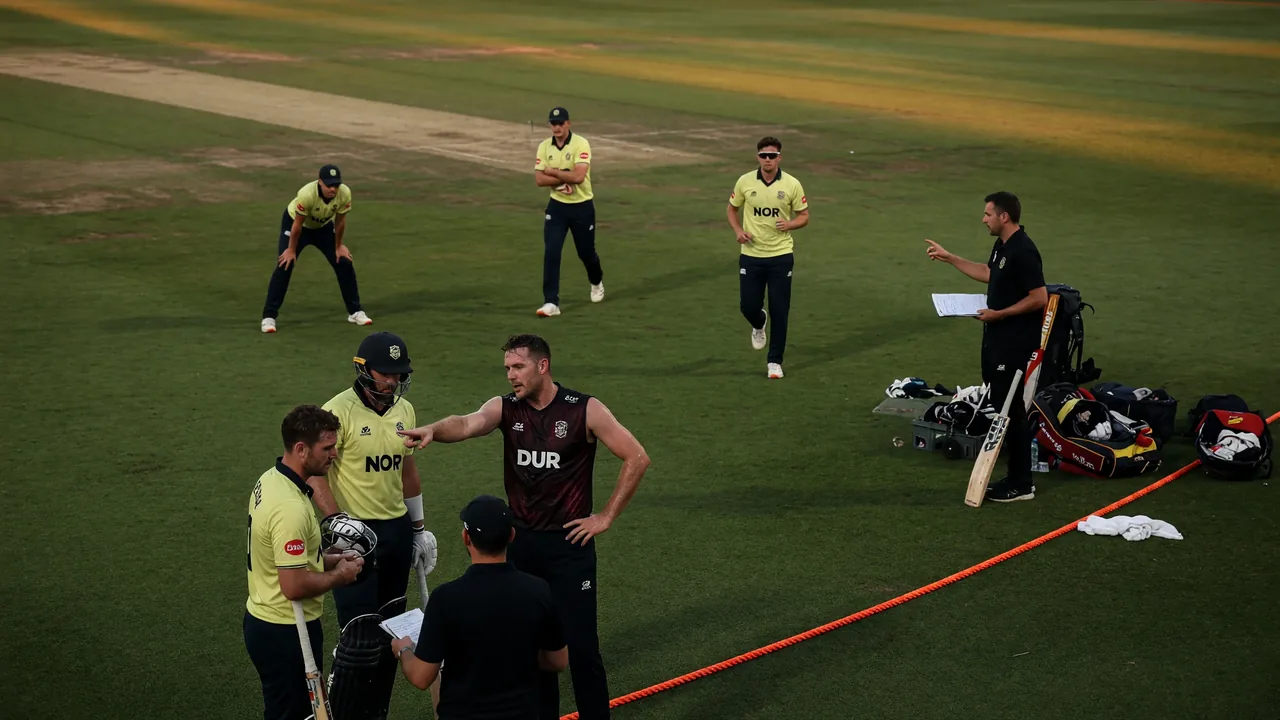
The avoid list published with the preview named Ben Mckinney of Durham and Harry Conway of Northamptonshire. That is the sort of quiet signal fantasy managers often overlook. When a preview deliberately flags players as avoidable, the practical response is not merely to drop them from the XI; it is to free the salary for a second seamer or a higher-ceiling all-rounder who can move the rank table.
Injury updates were marked as pending rather than confirmed. In practice that meant managers should treat the probable XIs as provisional until the toss card, and keep one like-for-like replacement ready for each of Lynn, Willey, Potts and Raine. A late withdrawal in any of those four slots would have forced a full rebuild rather than a cosmetic swap.
Captain and vice-captain: why Lynn and Willey led the card
The preview’s captain recommendation was Chris Lynn. The supporting numbers were blunt: 207 tournament runs at a strike rate of 173, plus a most-recent 69 off a chase of 165 at a strike rate of 191. On CricGuru contests that morning, Lynn was the high-floor, high-ceiling captain for small leagues and the default popular captain in mega contests.
David Willey was the recommended vice-captain. His 98 runs at a strike rate of 178 and four wickets gave him a dual-category path that pure batters cannot match if the top order fails. Naming the on-field captain as fantasy vice-captain also reduced role risk: Willey was certain to bowl and certain to bat inside the top six of the probable XI.
For managers hunting differentials, the next tier was Matthew Potts and Ben Raine on the Durham side, and Ben Sanderson on the Northamptonshire side. Potts offered new-ball wickets on a bounce-friendly surface. Raine offered the all-rounder floor if Durham’s batting again stalled. Sanderson fitted the same seam-first pitch note from the visiting attack. None of those three should have outranked Lynn or Willey as captain in a cash contest, but any of them could justify a grand-league captain tag in a small percentage of lineups.
The clean small-league path was Lynn captain, Willey vice-captain, with a 1-3-3-4 or 1-4-3-3 split depending on toss. The clean grand-league path flipped one Durham seamer into the captain slot only when ownership screens showed Lynn above roughly half the field. Without live ownership data, the retrospective still favours the Lynn-Willey core as the rational base.
Two fantasy templates that still teach useful lessons
Template A — small-league core. Captain Chris Lynn, vice-captain David Willey. Wicketkeeper: LD McManus. Batters: Lynn, Vasconcelos, Lees. All-rounders: Willey, Raine, Ackermann. Bowlers: Potts, Sanderson, Scrimshaw, Parkinson. The build keeps five Northamptonshire names to ride the unbeaten table leaders, while Potts and Raine protect the home side’s bowling upside after the failed chase of 152.
Template B — grand-league stretch. Captain Matthew Potts, vice-captain Chris Lynn. Wicketkeeper: Ollie Robinson. Batters: Lynn, Bedingham, McSweeney. All-rounders: Willey, Raine, Rhodes. Bowlers: Potts, Sanderson, Scrimshaw, Sowter. The stretch increases Durham exposure and bets that bounce at Riverside produces early wickets for the home spearhead, while Lynn remains the batting multiplier if Northamptonshire’s top order fires again.
Both templates deliberately exclude Ben Mckinney and Harry Conway, matching the avoid list from the original preview. Both also leave room for a final toss edit: if Durham bat first on a 160-165 surface, Bedingham and Lees rise; if Northamptonshire bat first, Vasconcelos becomes the second locked top-order name beside Lynn.
The broader lesson for later Blast rounds is structural rather than player-specific. When one side is unbeaten and the other has just failed a modest chase, fantasy value concentrates in the chasing side’s top-order aggressor and the dual-role captain, then spills into seamers who fit the venue note. That hierarchy still applies on any North Group night with a similar table split.
What this June fixture still teaches fantasy managers
Match 44 is useful less as a frozen team sheet and more as a decision pattern. An unbeaten Northamptonshire side with Lynn in full flow forced managers to decide whether to pay the ownership tax on the obvious captain or to hunt a Durham bowling differential after a 58-run reverse. Most cash contests reward the first path; most mega contests need a measured version of the second.
The pitch note of bounce, carry and a 160-165 first-innings band remains a clean teaching example for Riverside and similar northern venues. When the surface promises pace reward and the weather sits cool and humid, stack seam before spin, prefer all-rounders over pure lower-order hitters, and keep the captain tag on the batter already clearing the ropes at a strike rate above 170.
Compared with later Blast nights where both sides sit mid-table, the 6 June ledger was unusually lopsided: Durham on eight points after four games, Northamptonshire on 16 after a perfect start. That imbalance is exactly when popular captaincy becomes sticky. The managers who still found rank movement did it by pairing Lynn with one under-owned Durham seamer rather than by abandoning Lynn entirely.
For present-day CricGuru lineups in English domestic T20, the durable takeaways are simple. Trust recent chase evidence over table position alone when the previous target was only 152. Treat a dual-category captain such as Willey as the default vice-captain when the pure batter is already locked as captain. And treat an explicit avoid list as salary released, not as a footnote.
CricGuru continues to publish match-by-match fantasy reads, venue notes and captaincy frames for domestic and franchise cricket. Explore more CricGuru cricket predictions and match analysis for the frameworks that turn form tables into locked XIs.