
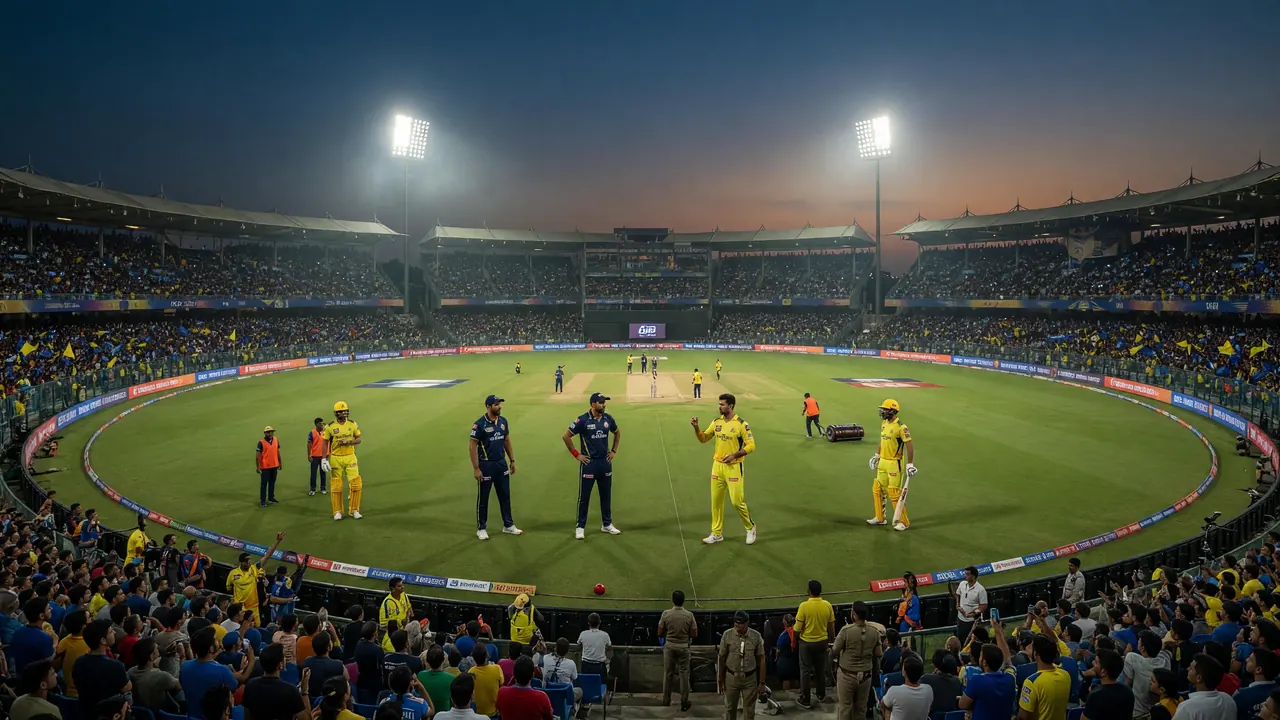
What Match 48 looked like on the morning of 5 May
Match 48 of IPL 2026 brought Delhi Capitals and Chennai Super Kings together at Arun Jaitley Stadium for a 7:30 PM IST start. The fixture sat in the middle third of the league phase, when every result still moved net run rate and playoff arithmetic, but neither side could treat the night as a free hit.
Both franchises arrived on eight points from nine matches. Delhi Capitals sat seventh with a net run rate of −0.895. Chennai Super Kings sat sixth with a net run rate of 0.005. The points column looked identical; the rate column did not. That split already told fantasy managers something concrete: CSK could absorb a modest defeat without falling as far on the table, while DC needed both the win and a clean margin if they wanted breathing room later in the season.
Broadcast notes that morning listed Star Sports Network and JioHotstar. Weather copy pointed to a clear evening, temperatures between 32°C and 38°C, and roughly a five percent chance of rain. In practical terms that meant a full forty-over contest was the base case, not a shortened calculation problem.
The historical head-to-head still leaned heavily toward Chennai Super Kings. Across 32 previous IPL meetings, CSK held 20 wins to DC’s 12, a win rate of 62.5 percent. An earlier 2026 meeting had already gone CSK’s way by 23 runs. Those numbers did not decide the night by themselves, but they shaped ownership: managers rarely treat a side with that record as disposable, even when the table shows two teams level on points.
Form ledger: Delhi’s chase pattern, Chennai’s batting spine
Delhi Capitals’ season story to that point was unusually one-sided. All four of their wins had come while chasing. That is not a trivia line for a match report; it is a structural fantasy signal. When a side has only proved itself in the second innings, managers who still want home batters need a reason beyond venue familiarity. The cleaner DC stack leaned toward players who could still score if the side bowled first and toward finishers who thrived when a target was already on the board.
KL Rahul sat at the centre of that stack. He had 433 runs at a strike rate of 186, with three fifties and a century. Those are captaincy numbers in any ordinary mid-season slate. They become louder when the same batter also keeps wicket, because the dual role frees a pure batting slot elsewhere in the XI without sacrificing floor.
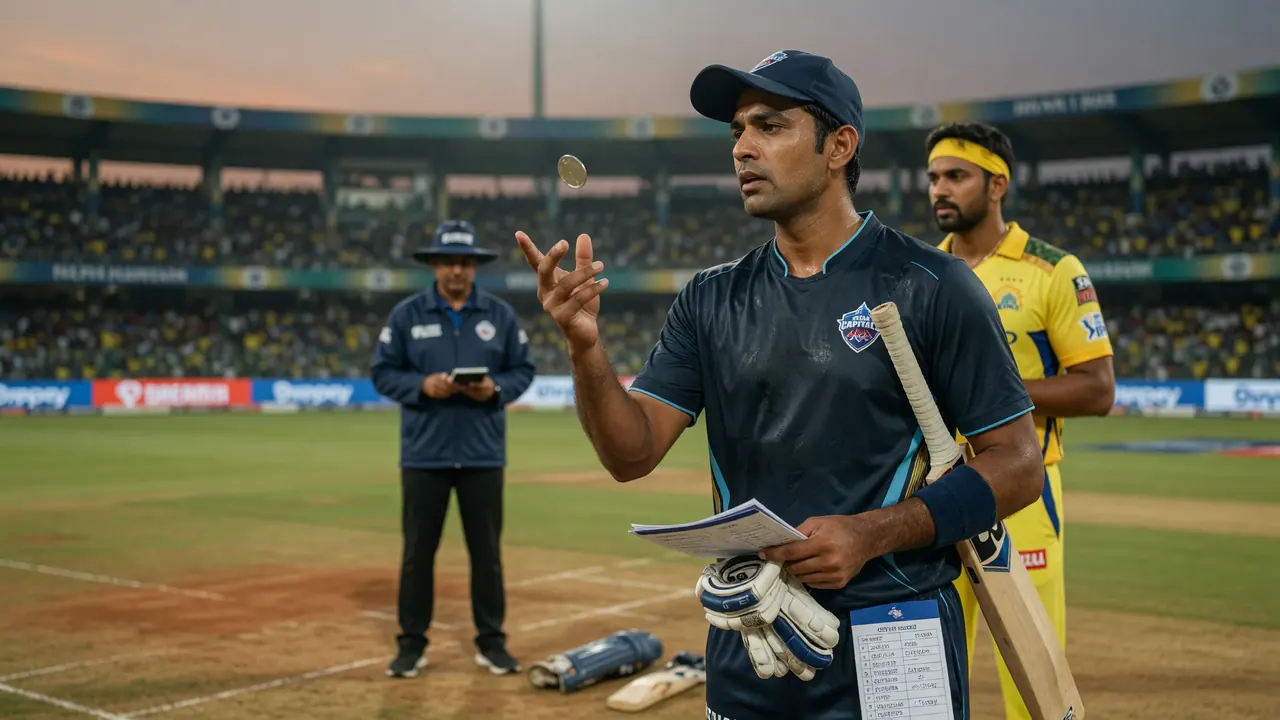
Pathum Nissanka added a second clear batting data point for Delhi. A recent 62 off 33 against Rajasthan Royals showed the same early-over aggression managers look for when they want a second top-order multiplier beside the captain. On a batting-friendly Delhi surface, that kind of innings is not an outlier sample; it is the profile the venue rewards when the ball comes on.
Chennai Super Kings answered with a different kind of form book. Ruturaj Gaikwad had an unbeaten 67 against Mumbai Indians and back-to-back fifties. Sanju Samson sat on 315 runs at a strike rate of 168. Those two names gave CSK a top-order and middle-order path that did not depend on a single explosion. For fantasy, that meant CSK batting exposure could be split rather than concentrated, which is useful when ownership on Rahul is already expected to climb.
The bowling ledger told a sharper story. Anshul Kamboj led CSK with 17 wickets at an economy of 8.49. Axar Patel had 8 wickets at an economy of 8.53 for Delhi. Kamboj’s raw wicket count made him the safer specialist bowling lock. Axar’s value sat in the dual-category floor: overs in the middle, batting utility lower down, and a role that survives toss uncertainty better than a pure death bowler.
Arun Jaitley Stadium frame: 170-plus first innings and a chase bias
The venue note attached to the Match 48 preview described Arun Jaitley Stadium as batting-friendly, with first-innings totals often climbing above 170. Dew was expected to aid the side chasing, and chasing teams had won about 65 percent of IPL 2026 matches at the ground to that point. Those three facts, taken together, pushed fantasy builds toward top-order batters who score through the line and toward bowlers who can still take wickets when the ball is wet later in the night.
A first-innings band above 170 is not automatically a free-hit for every batter. It does raise the cost of pure lower-order hitters who need a collapse to get strike. On that band, wicketkeepers and openers who face the powerplay retain relative value, while specialist death bowlers without batting upside become expensive unless they are already among the season’s leading wicket-takers. Kamboj cleared that bar. Several cheaper CSK and DC change bowlers did not.
The chase bias also explained why the preview leaned toward Delhi fielding first if they won the toss. Restricting CSK to roughly 170–175 was the stated target range, with a forecast Delhi win by four to six wickets and Delhi treated as about 62 percent favorites. Whether that percentage proved exact is secondary for a retrospective. What matters is the decision tree managers actually used: if DC fielded first, Rahul and Nissanka rose; if CSK batted second under dew, Gaikwad and Samson gained the same second-innings premium.
Clear weather at 32–38°C removed one common complication. There was little reason to pre-build around a five-over sprint or a reduced bowling allocation. Managers could lock full-match templates and keep only role-based replacements for late XI changes rather than weather contingencies.
Dream11 core that managers actually built around
The core published with the original Match 48 preview was unusually clean. Wicketkeeper: KL Rahul (DC). Batters: Ruturaj Gaikwad (CSK), Pathum Nissanka (DC), Sanju Samson (CSK). All-rounders: Axar Patel (DC), Jamie Overton (CSK), Shivam Dube (CSK). Bowlers: Mitchell Starc (DC), Anshul Kamboj (CSK), Kuldeep Yadav (DC), Noor Ahmad (CSK).
Read as a structure rather than a name list, the XI splits five and six across the two sides and keeps three all-rounders. That is a classic mid-season IPL shape when both teams are level on points and the surface promises runs. The all-rounder row is doing the real work: Axar covers Delhi’s middle overs, Overton offers pace and lower-order hitting for CSK, and Dube supplies the left-hand boundary option that becomes valuable when the ball stops moving after the powerplay.
The bowling four also had a clear internal logic. Starc and Kamboj attacked with the new ball. Kuldeep and Noor covered the middle and change-of-pace overs where Delhi’s chase-friendly surfaces still leave room for wrist-spin and left-arm mystery. Managers who replaced either spinner with a third seamer needed a toss-driven reason, not a preference for pace depth alone.
The avoid list named Prithvi Shaw and Mukesh Choudhary. That is the quiet part of a preview most managers skim. When a form sheet deliberately flags two names, the practical response is not merely to drop them from the playing XI; it is to free salary for a second locked all-rounder or for the higher-ceiling bowler already leading the wickets column. On this slate, that salary more often moved toward Kamboj or Overton than toward another pure batter.
Captain and vice-captain: why Rahul and Gaikwad led the card
The fantasy captain recommendation was KL Rahul. The supporting numbers were blunt: 433 runs, strike rate 186, three fifties and a century. On CricGuru contests that evening, Rahul was the high-floor, high-ceiling captain for small leagues and the default popular captain in mega contests. The wicketkeeping role only strengthened the case, because dismissal points and catching volume sit on top of the batting ceiling.
Ruturaj Gaikwad was the recommended vice-captain. Back-to-back fifties and the unbeaten 67 against Mumbai Indians gave him a clean top-order path on a ground that rewards early momentum. Naming the CSK opener as vice-captain also balanced the card: managers locked Delhi’s best batter as captain and still kept exposure to the side with the superior net run rate and the stronger head-to-head record.
For managers hunting differentials, the next tier was Anshul Kamboj, Axar Patel and Sanju Samson. Kamboj offered pure wicket upside as CSK’s leading bowler. Axar offered dual-category insurance if Delhi’s batting stalled after a strong powerplay. Samson offered a middle-order ceiling at a strike rate of 168 if the chase or set total opened up after the tenth over. None of those three should have outranked Rahul as captain in a cash contest, but any of them could justify a grand-league captain tag in a small percentage of lineups.
The clean small-league path was Rahul captain, Gaikwad vice-captain, with a 1-3-3-4 or 1-4-2-4 split depending on final XI confirmation. The clean grand-league path flipped Kamboj or Axar into the captain slot only when ownership screens showed Rahul above roughly half the field. Without live ownership data, the retrospective still favours the Rahul-Gaikwad core as the rational base.
Two fantasy templates that still teach useful lessons
Template A — small-league core. Captain KL Rahul, vice-captain Ruturaj Gaikwad. Wicketkeeper: Rahul. Batters: Gaikwad, Nissanka, Samson. All-rounders: Axar, Overton, Dube. Bowlers: Starc, Kamboj, Kuldeep, Noor. The build keeps five Delhi names to ride the home chase pattern and the 62 percent match lean, while Gaikwad, Samson, Overton, Dube, Kamboj and Noor protect CSK’s batting spine and leading wicket-taker.
Template B — grand-league stretch. Captain Anshul Kamboj, vice-captain KL Rahul. Wicketkeeper: Rahul. Batters: Gaikwad, Nissanka, Samson. All-rounders: Axar, Overton, Dube. Bowlers: Starc, Kamboj, Kuldeep, Noor. The stretch keeps the same skeleton and moves the multiplier onto CSK’s leading bowler, betting that a 170-plus surface still produces early wickets for the side bowling with a hard new ball under clear skies.
Both templates deliberately exclude Prithvi Shaw and Mukesh Choudhary, matching the avoid list from the original preview. Both also leave room for a final toss edit: if Delhi bat first on a 170-plus surface, Nissanka and Rahul rise further; if Chennai chase under dew, Gaikwad and Samson become the second locked batting pair beside any remaining Delhi stack.
The broader lesson for later IPL rounds is structural rather than player-specific. When two sides sit on identical points but one owns a clear chase record and a batter striking at 186, fantasy value concentrates in that batter-keeper and then spills into the opponent’s in-form opener and leading wicket-taker. That hierarchy still applies on any Delhi night with a similar table split and a batting-first surface note.
What this May fixture still teaches fantasy managers
Match 48 is useful less as a frozen team sheet and more as a decision pattern. Two sides on eight points forced managers to decide whether to trust Delhi’s chase-only win column and Rahul’s ceiling, or to overweight CSK’s head-to-head edge and superior net run rate. Most cash contests reward the first path when one batter is already clear of the pack; most mega contests need a measured version of the second through Gaikwad or Kamboj.
The pitch note of a batting-friendly Arun Jaitley surface, first-innings totals above 170, dew and a 65 percent chase rate remains a clean teaching example for Delhi fixtures. When the ground promises runs and the weather sits clear and warm, lock top-order multipliers before pure lower-order hitters, prefer wicket-taking bowlers over containment specialists, and keep the captain tag on the batter already clearing the ropes at a strike rate above 180.
Compared with later league nights where one side is already detached at the top of the table, the 5 May ledger was unusually tight: both teams on eight points, separated mainly by net run rate and by Delhi’s −0.895 mark. That balance is exactly when popular captaincy becomes sticky. The managers who still found rank movement did it by pairing Rahul with one under-owned CSK bowling or middle-order differential rather than by abandoning Rahul entirely.
For present-day CricGuru lineups in franchise T20, the durable takeaways are simple. Trust a documented chase pattern when every win has come batting second. Treat a dual-role batter-keeper on 400-plus runs as the default captain before searching for a clever differential. And treat an explicit avoid list as salary released for the leading wicket-taker or the second locked all-rounder, not as a footnote under the probable XI.
CricGuru continues to publish match-by-match fantasy reads, captain selectors and points tools for franchise and domestic cricket. Explore more CricGuru fantasy tools and match utilities when you turn form tables into locked XIs.